Choosing the right centrifugal pump for your application requires considering several important factors. Here are some steps you can follow to make an informed decision:
Determine Flow Rate and Head
The flow rate is the amount of fluid you need to move in a given time, while the head is the pressure required to move that fluid to its destination. You can determine these values by understanding your system requirements, such as the distance between the pump and the point of discharge, the type of fluid you are pumping, and the required flow rate.
Questions to be answered before selecting the correct pump:
To ensure the correct pump is selected, the following information is required:
- Liquid to be pumped: Water, mine dewatering, chemicals, sewage, etc.
- Liquid condition: Clean water, dirty water, abrasive liquid, or liquid containing solids.
- Solids in the liquid: Sand, sludge, abrasive particles, or other debris.
- Required flow rate: Litres per minute required at the end of the pipeline.
- Pipeline elevation: Total height the liquid needs to be pumped.
- Suction source: Tank, sump, dam, pit, or other water source.
- Suction depth: Distance in metres from the water level to the pump inlet.
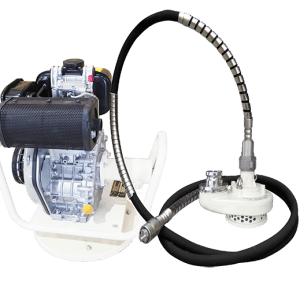
- Power source: Petrol, diesel, electric, or hydraulic motor.
Once this information is confirmed, the correct pump can be selected based on the application, flow requirements, suction conditions, head pressure, and liquid type.
Identify the pump type
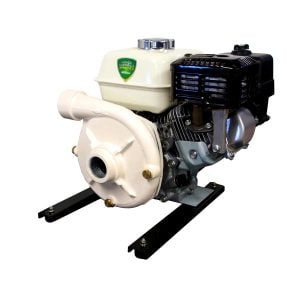
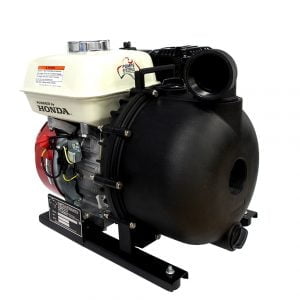
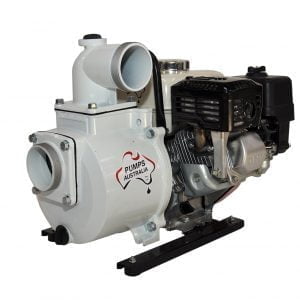
There are different types of centrifugal pumps available, including end-suction, split-case, multistage, and vertical turbine pumps. Each has unique features and applications, and choosing the right one depends on your specific needs.
- Self-priming Pumps – very popular
- Dry-Prime pumps with Vacuum assisted
- End centrifugal
- Trash Pumps
- Transfer pumps
- High Head elevation to be pumped
- High volume to be pumped
Consider the materials of construction
The materials used to construct the pump should be compatible with the fluid being pumped. For example, if the fluid is acidic, you may need a pump made of stainless steel or other corrosion-resistant materials.
Evaluate the motor requirement – Petrol, Diesel, Electric or Hydraulic Motors
The motor should be sized appropriately to match the pump’s flow rate and head requirements. Also, consider the motor’s operating environment, such as temperature and humidity, to ensure it is suitable for the application.
Look at the pump performance curve
The performance curve provides information about the pump’s efficiency, head, and flow rate at different operating points. By comparing the pump curve with your system requirements, you can determine if the pump is suitable for your application.
Check for additional features
Some centrifugal pumps come with additional features, such as variable speed drives, suction strainers, and discharge silencers, which can enhance performance and efficiency.
Our pump systems can also be set up to maintain a constant flow rate where required. This can be achieved using flow control equipment and 4–20 mA transducers, allowing the system to monitor and adjust performance to maintain the required flow.
Overall, selecting the right centrifugal pump for your application involves consideration of a number of technical issues.
So, to ensure you get the right pump for the right job, contact our technical experts at Pumps Australia, they will ensure that all the necessary technical factors are considered and that a pump is selected that optimizes your specific application and will provide reliable and efficient performance over time.